
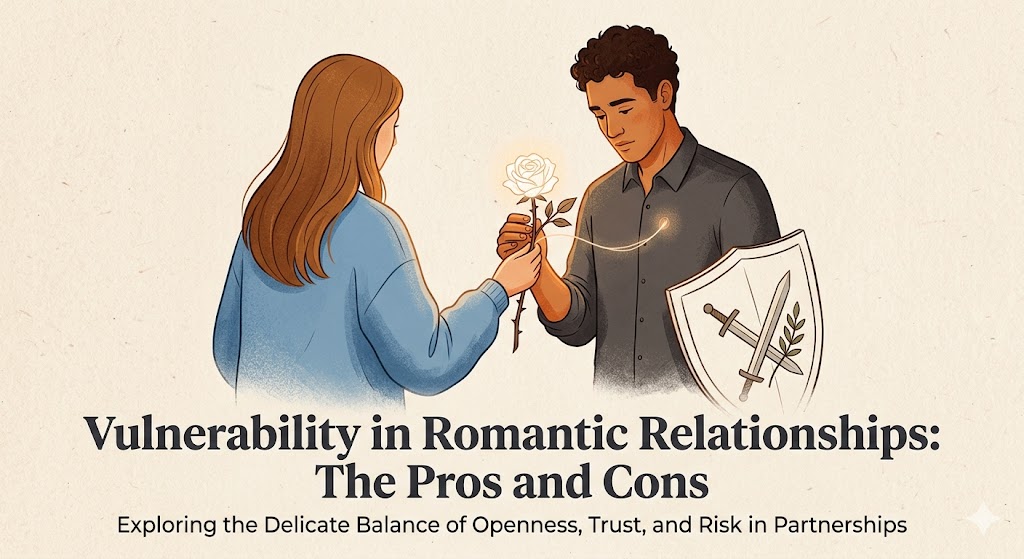
Letting someone see you without armor feels like handing them a loaded weapon. They could protect you with it or they could aim. Romantic relationships ask for this exchange constantly, in small doses and in full exposure, and the results vary wildly depending on who holds the other end. Some couples build entire lives on the willingness to be seen. Others collapse under the weight of it. The difference rarely comes down to effort alone.
Vulnerability operates as a request and a risk at the same time. You ask your partner to receive something tender, and you lose control over what happens next. The research on this topic confirms what many people already suspect from their own histories: openness can strengthen a bond or fracture it, and the outcome depends on factors that neither partner fully controls.
The Case for Letting Your Guard Down
Romantic intimacy requires disclosure. Two people cannot build closeness while keeping their interior lives sealed off. When one person shares something difficult or private, the other receives an invitation to do the same. Studies show that people are more likely to reciprocate vulnerability when they feel trusted. This creates a feedback loop where each act of openness encourages another.
Longitudinal research demonstrates that intimacy and trust tend to grow together over time. Increases in one variable lead to corresponding increases in the other. Couples who practice this kind of exchange report higher satisfaction across multiple areas of their relationship, including their physical connection.
Gottman couple therapy approaches have shown positive effects on marital adjustment and intimacy. The work involves learning to tolerate discomfort, to stay present when a partner reveals something uncomfortable, and to respond without defensiveness. These skills do not come automatically. They require repetition and conscious attention.
When Openness Becomes a Gamble
Vulnerability in building intimacy carries real weight in romantic partnerships, but the outcome depends heavily on the emotional foundation each person brings. Research shows that people with lower self-esteem tend to perceive closeness as threatening. Deficits in self-worth correlate with heightened sensitivity to rejection, emotional avoidance, and impaired relational trust. When someone enters a relationship already guarded, attempts at openness can backfire, creating distance instead of connection.
Trust violations compound the problem. Studies indicate that betrayals in close relationships can trigger anxiety, depression, PTSD symptoms, and long-term difficulties forming new bonds. The Gottman Institute reports that couples with strong emotional attunement are 60% more likely to feel satisfied in their sexual relationship, but reaching that level requires both partners to tolerate discomfort without retreating.
Timing Matters More Than Intention
Sharing everything at once does not produce intimacy. It produces overwhelm. Early disclosure of highly personal material can destabilize a new relationship before the foundation has time to set. Partners who reveal trauma histories, deep fears, or past failures in the first weeks of dating often find themselves feeling exposed without the safety net of established trust.
The pace of vulnerability should match the pace of the relationship. A person who has known you for 3 months cannot absorb the same material as someone who has known you for 3 years. This is not about withholding. It is about recognizing that trust builds incrementally, and that rushing the process can damage both people.
Some disclosures require a partner who has already demonstrated reliability. Others can happen earlier without much risk. The distinction depends on the content and on the specific history of the person sharing.
What Vulnerability Actually Looks Like
The word gets used loosely. People sometimes confuse emotional dumping with vulnerability, or mistake passive dependence for openness. Actual vulnerability involves expressing needs, fears, or desires while maintaining responsibility for your own emotional state. You share something difficult and allow your partner to respond without demanding a specific reaction.
Asking for reassurance after a hard day counts. Telling your partner you felt hurt by something they said counts. Admitting you do not know how to handle a situation counts. These moments require the willingness to be seen as imperfect, uncertain, or in need.
Collapsing into someone else and expecting them to manage your emotions does not count. That places the burden of your inner life on another person, which breeds resentment over time.
When Vulnerability Becomes Harmful
Not all partners can receive what you offer. Some people punish disclosure. They use private information during arguments, withdraw affection when you express need, or treat your emotions as problems to fix rather than realities to witness. In these relationships, vulnerability produces harm rather than connection.
People who grew up in environments where emotional expression led to punishment often repeat the pattern in adult relationships. They may choose partners who confirm their belief that openness is dangerous. Breaking this cycle requires recognizing the pattern and, in many cases, working with a therapist who can help rewire old responses.
Gen Z demonstrates heightened emotional awareness compared to previous generations, but awareness alone does not guarantee effective regulation or relational resilience. Knowing your feelings and managing them in the context of a relationship are separate skills.
The Balance Point
Healthy romantic relationships require both partners to take risks with disclosure and to protect themselves when necessary. Complete openness with an untrustworthy partner leads to damage. Complete guardedness with a trustworthy partner leads to stagnation.
The goal is calibrated honesty: sharing in proportion to the safety available, increasing exposure as trust grows, and pulling back when the relationship cannot support what you need to express. This requires ongoing assessment. A partner who felt safe last year may not feel safe now. Circumstances change.
Couples who learn to read these conditions together tend to fare better than those who operate on fixed assumptions about what vulnerability should look like. The conversation about how much to share and when becomes part of the relationship itself.
What the Research Cannot Tell You
Data describes patterns across populations. It does not predict what will happen in your specific relationship with your specific partner. A study showing that trust and intimacy grow together does not guarantee your trust will grow. A statistic about emotional attunement does not ensure your partner will show up when you need them.
You make decisions about vulnerability based on incomplete information, every time. The outcome remains uncertain until it arrives. This uncertainty is part of the cost. It is also part of what makes the reward valuable when it comes.