
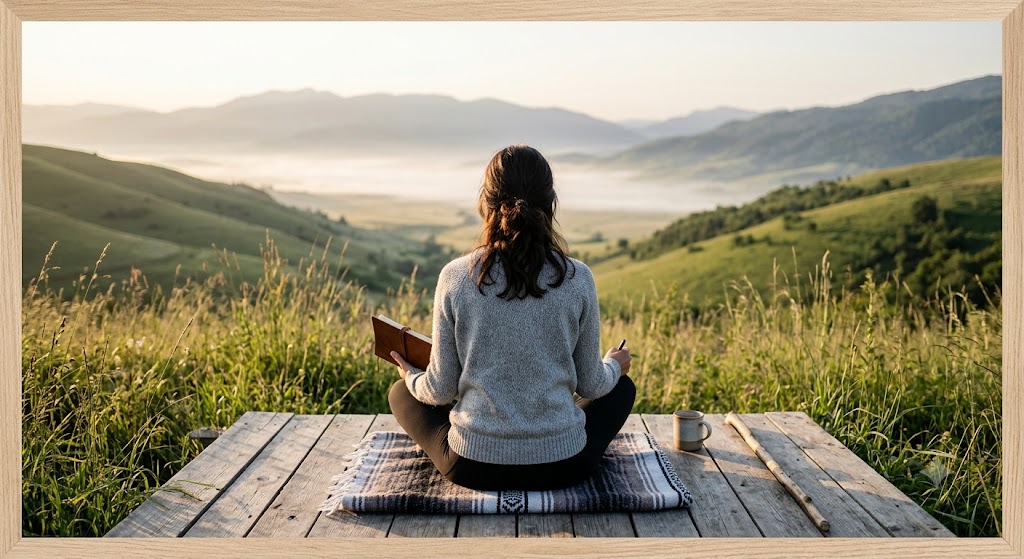
Burnout rarely happens overnight. It builds quietly through long workdays, endless notifications, emotional demands, and the feeling that there is never enough time to truly rest. Eventually, even simple decisions feel exhausting, creativity fades, and you may find yourself going through the motions instead of living with intention.
While a weekend at home can help you catch up on sleep, it often doesn’t provide the mental distance needed for real renewal. An individual retreat offers something different: uninterrupted space to slow down, reflect, and reconnect with yourself away from the constant noise of everyday life.
Why Burnout Needs More Than a Day Off
Taking time off is important, but burnout isn’t always solved by simply doing less. Many people spend vacations checking emails, catching up on chores, or filling every hour with activities. The mind never fully shifts out of survival mode.
Stepping away from familiar routines creates a psychological reset. Without the usual responsibilities competing for your attention, your nervous system has an opportunity to settle. Stress hormones gradually decrease, your thoughts become clearer, and problems that once felt overwhelming often begin to look more manageable.
This isn’t about escaping your life. It’s about creating enough distance to return with a healthier perspective.
Quiet Creates Mental Clarity
Silence can feel uncomfortable at first. We’re so used to filling every moment with music, podcasts, social media, or conversations that true quiet has become rare.
Yet research continues to show that periods of calm allow the brain to recover from constant stimulation. In a peaceful environment, your attention naturally widens. You notice your thoughts instead of reacting to them, making it easier to process emotions and recognize what’s been weighing you down.
Many people discover that their best ideas don’t arrive during busy workdays. They emerge while walking through nature, sitting quietly with a journal, or simply allowing the mind to wander without interruption.
Reflection Helps You See What’s Really Draining You
Burnout often feels like one giant problem, but it’s usually made up of many smaller ones.
Maybe you’ve taken on too many commitments. Maybe you’ve stopped making time for relationships that matter. Perhaps your work no longer aligns with your values, or you’ve ignored signs that your body has been asking for rest.
A solo retreat gives you permission to ask honest questions without rushing toward immediate answers.
Writing in a journal, practicing mindfulness, reading, or simply sitting in silence can reveal patterns that are easy to miss during a normal week. Instead of reacting to daily pressures, you begin responding from a place of greater awareness.
Mindfulness Becomes Easier Away From Daily Distractions
Meditation and mindfulness don’t require perfect concentration. They simply require enough space to notice what’s happening in the present moment.
When you’re surrounded by deadlines, household responsibilities, and constant notifications, staying present can feel nearly impossible. During a retreat, however, mindfulness becomes much more natural.
Simple practices can make a meaningful difference:
- Take slow walks without your phone.
- Sit quietly for ten minutes each morning.
- Practice mindful breathing before meals.
- Journal without judging what comes onto the page.
- Spend time observing nature instead of consuming more information.
These small moments of presence gradually calm the mind and help reduce the constant feeling of urgency that often accompanies burnout.
You Return With Better Focus
One of the biggest misconceptions about rest is that it makes us less productive. In reality, meaningful rest often improves concentration, decision-making, and creativity.
After stepping away for several days, many people return with renewed motivation and clearer priorities. Problems that once felt impossible may suddenly have practical solutions because your brain has finally had time to recover.
Rather than trying to work harder, you begin working with greater intention.
Choosing the Right Place Matters
The environment you choose plays a significant role in your experience. A busy hotel or crowded tourist destination may offer a change of scenery, but it doesn’t always provide the quiet needed for genuine reflection.
If you’re planning your first solo retreat, look for a peaceful setting surrounded by nature where you can slow your pace, disconnect from everyday responsibilities, and create room for uninterrupted reflection. An option like a personal retreat in the Georgia countryside provides the kind of calm environment that supports meaningful rest, whether your goal is to journal, meditate, walk, or simply spend time in silence.
The destination itself isn’t what creates transformation. It’s the space it gives you to reconnect with yourself.
Give Yourself Permission to Pause
Burnout often convinces us that we need to push harder, stay busier, and keep moving. In reality, the opposite is often true.
Taking time for an individual retreat isn’t about avoiding responsibility—it’s about caring for your mental and emotional well-being so you can return with greater clarity, resilience, and purpose.
Sometimes the most productive thing you can do is step away long enough to remember what truly matters.